
The area of photonics has actually witnessed amazing advancements, particularly in the growth of different modulators that play important functions in numerous optical applications. Among these, fiber acousto-optic modulators (AOMs) and their numerous variants, such as space AOMs and free-space AOMs, stand apart as a result of their convenience and effectiveness. An acousto-optic modulator utilizes audio waves to control the strength, frequency, or stage of light travelling through a medium, using an effective approach for pulse modulation. With the growing demand for high-resolution and precision applications, these devices have ended up being integral in areas like telecommunications, clinical imaging, and clinical research.
These lasers produce light with an exceptionally narrow spooky size, making them ideal for various complex applications, consisting of coherent interaction systems and high-resolution spectroscopy. This integration demonstrates the fad in the direction of raised density and efficacy in optical systems without compromising efficiency.
The energy of fiber optic delay lines can not be overstated, specifically in developing sophisticated optical systems that call for exact timing and synchronization. These delay lines harness the inherent buildings of fiber optics to handle light signals successfully, allowing engineers and scientists to explore high-speed data transmission or complex timing trying outs minimal loss of integrity. The electric optical fiber delay line acts as a main component in this context, helping with the control of light signals to suit details demands.
Explore fiber delay line the current developments in photonics, concentrating on the vital duty of fiber acousto-optic modulators in enhancing laser applications, telecommunications, and accuracy optical systems for diverse industries.
Modulators are vital in laser systems, playing a vital role in changing continuous wave results right into pulse formats. Acousto-optic Q-switch modulators serve this precise function, enabling rapid modulation of laser outcomes, which results in high-peak power pulses. This capacity is crucial in applications such as material processing, where accuracy and speed are necessary. The selection in between an AOM and an electro-optic modulator (EOM) frequently occurs in discussions surrounding modulation methods. While both offer the primary feature of pulse modulation, an AOM typically exhibits higher optical power taking care of abilities and faster changing times compared to EOMs, making AOMs specifically useful in high-energy laser applications.
The distinction between acousto-optic buttons and modulators is a critical element of recognizing just how these devices operate in different situations. In contrast, a modulator adjusts the light’s properties, directly affecting the light beam’s attributes.
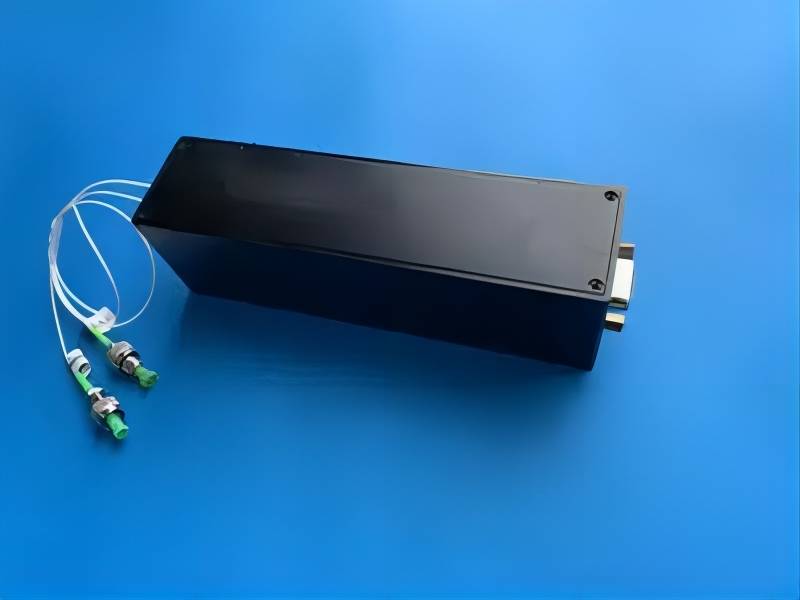
Acousto-optic devices have progressively gained grip on the market, driven by the escalating demand for sophisticated optical modern technologies. The acousto-optic modulator market is witnessing significant growth due to applications in telecommunications, military systems, and commercial production. These devices are essential for frequency changing, beam of light steering, and signal handling. As innovation develops, firms are establishing cutting-edge remedies to deal with the needs for miniaturization, boosted efficiency, and cost-effectiveness.
The characteristics of narrow linewidth laser sources are basic to certain applications, where comprehensibility and accuracy are critical. Narrow linewidth fiber lasers display secure discharge with very little spooky spread, dealing with applications in fiber-optic interactions and picking up innovations. These qualities are crucial when dealing with long-distance information transmission, where signal degradation can considerably influence the top quality of info obtained. Coupling these fibers with advanced modulators enables scientists to discover new frontiers in optical communication systems.
Acoustic optical deflectors contribute to the adaptability of optical systems, using a way to adjust light dynamically and efficiently by using acoustic waves as the managing device. Such devices can be found in numerous applications, from laser scanning systems to innovative imaging methods. By utilizing the principles of acousto-optics, these deflectors assist in achieving accurate and rapid modifications in the beam’s trajectory without the need for complex mechanical components.
In exploring the sorts of pulse modulation, one recognizes the ins and outs and variety integral in the field. Pulse modulation techniques, such as pulse-width modulation (PWM) and pulse-position modulation (PPM), permit adjustment of light based upon discharge to develop varying signal types. These techniques promote advancements in electronic devices and photonics, from managing laser outcomes to enhancing the efficiency of fiber optic systems.
More factor to consider of optical passive components reveals their important function in boosting system reliability. Their payment to general system efficiency is critical, largely when integrated with modulators and other dynamic optical devices.
The growing focus on space applications highlights the demand for dependable and robust optical systems that can function effectively in severe conditions. Space acousto-optic modulators, specifically, suit the one-of-a-kind needs of space objectives, where aspects such as radiation direct exposure and temperature fluctuations can considerably influence functionality. The development of space-grade acousto-optic devices makes sure that interaction and data collection stay continuous in the extreme environments of space.
Acousto-optic Q-switching represents one of one of the most effective approaches of generating high-energy pulses, essential for applications varying from laser noting to medical treatments. The modulation capabilities intrinsic in AOMs permit them to adapt to varying requirements, enhancing pulse duration and energy output. They offer an ingenious path to elevate laser applications throughout diverse fields.
As we dig even more into the future of photonics, it ends up being significantly clear that development in laser modulators and acousto-optic technologies is essential. The developments in modulator drivers improve the efficiency with which EOMs and aoms run, enabling much faster and more reputable efficiency. The crossover between developments in modulation and the raising demand for greater bandwidth and reduced latency in communication systems recommends a future abundant with possibilities for reinforced optical interactions.
Comprehending the basic technicians that underpin acoustic optical modulators will lead to exceptional design and efficiency improvements as research study remains to prosper. The exploration of brand-new materials, combinations, and strategies in locations like micro-nano construction will likely produce devices with also finer control and expanded operational lifetimes. These innovations not only guarantee improved performance for existing systems but invite completely new applications within emerging modern technologies in quantum computing, robotics, and progressed production.
In recap, the domain of acousto-optic modulators and relevant fiber-optic innovations personifies quick progress and complexity, functioning as foundational aspects within many contemporary optical applications. With the expanding demand for precision and high efficiency in various markets, the advancement of acousto-optic devices, such as fiber AOMs, remains to progress, adapting to brand-new challenges and chances. As researchers and engineers push the borders of innovation, these devices will stay main to forming the future of optical communication, laser applications, and beyond, declaring a new era of technical innovation.